En Fá — Chair Design
Competition entry for Dimueble's 18th National Furniture Design Competition — "Reinventing the Chair." A minimal, accessible chair designed around ease of production, assembly, and integration into everyday Mexican homes.
Industrial Design

Note
This project represents the industrial design dimension of my background — I hold a degree in Engineering in Innovation and Design from Universidad Panamericana, and this competition entry reflects that engineering and product design foundation alongside my professional graphic design work.
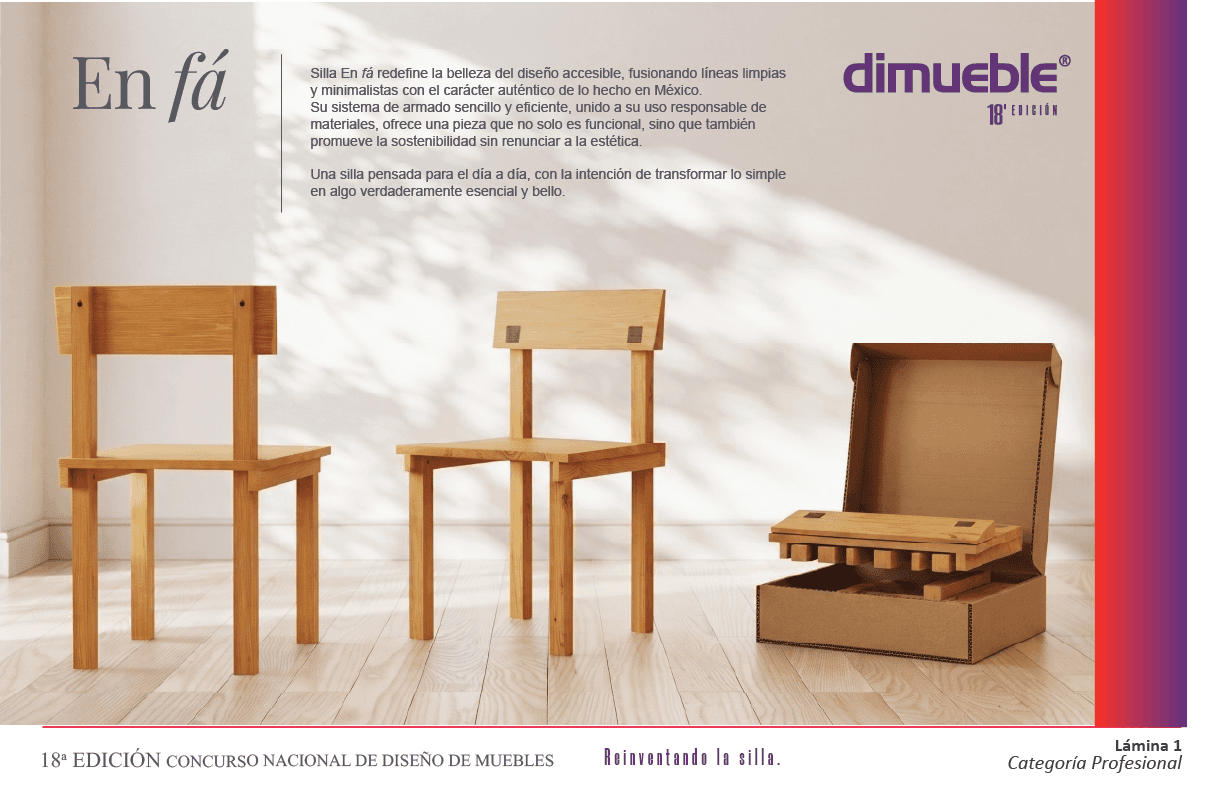
Competition presentation boards shown as submitted to the 18ª Edición Concurso Nacional de Diseño de Muebles.
Project Overview
Project: Silla En Fá
Competition: Dimueble — 18ª Edición Concurso Nacional de Diseño de Muebles
Theme: Reinventando la Silla (Reinventing the Chair)
Category: Profesional
Collaborator: Collaborative entry
Disciplines: Industrial Design · Product Design · Sustainable Design
En Fá is a competition entry for Dimueble's 18th National Furniture Design Competition — one of Mexico's most recognized furniture design competitions. The challenge: reinvent the chair. The response: prove that good design doesn't have to be expensive, complex, or exclusive.
The Concept
The name "En Fá" encapsulates the entire design philosophy — three facilidades: facilidad de producción (ease of production), facilidad de armado (ease of assembly), and facilidad de integración al hogar (ease of integration into the home).
In a design landscape where beauty is often associated with exotic materials and expensive finishes, En Fá takes the opposite position: beauty can come from the everyday, from what already exists, if it is designed with intention.
The chair is not trying to be new through formal complexity. It's trying to be new through a clearer way of thinking about what design is for.
Design & Engineering
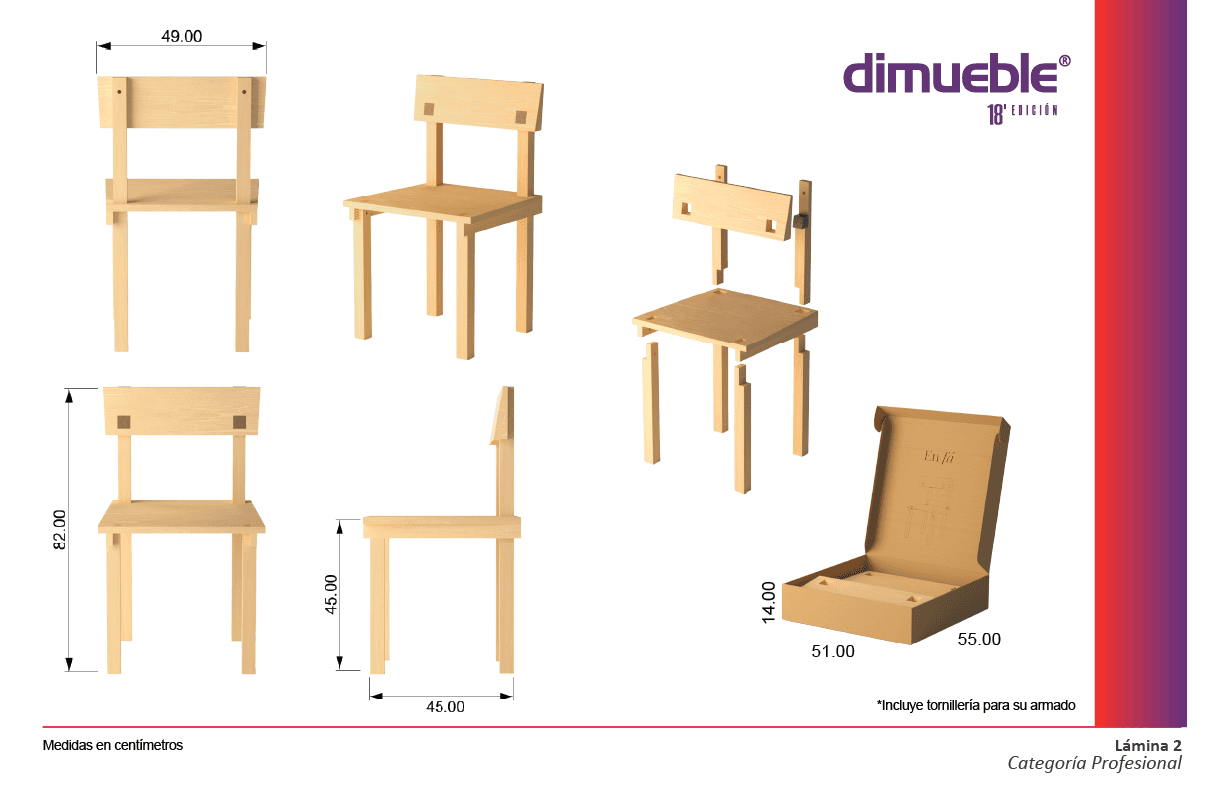
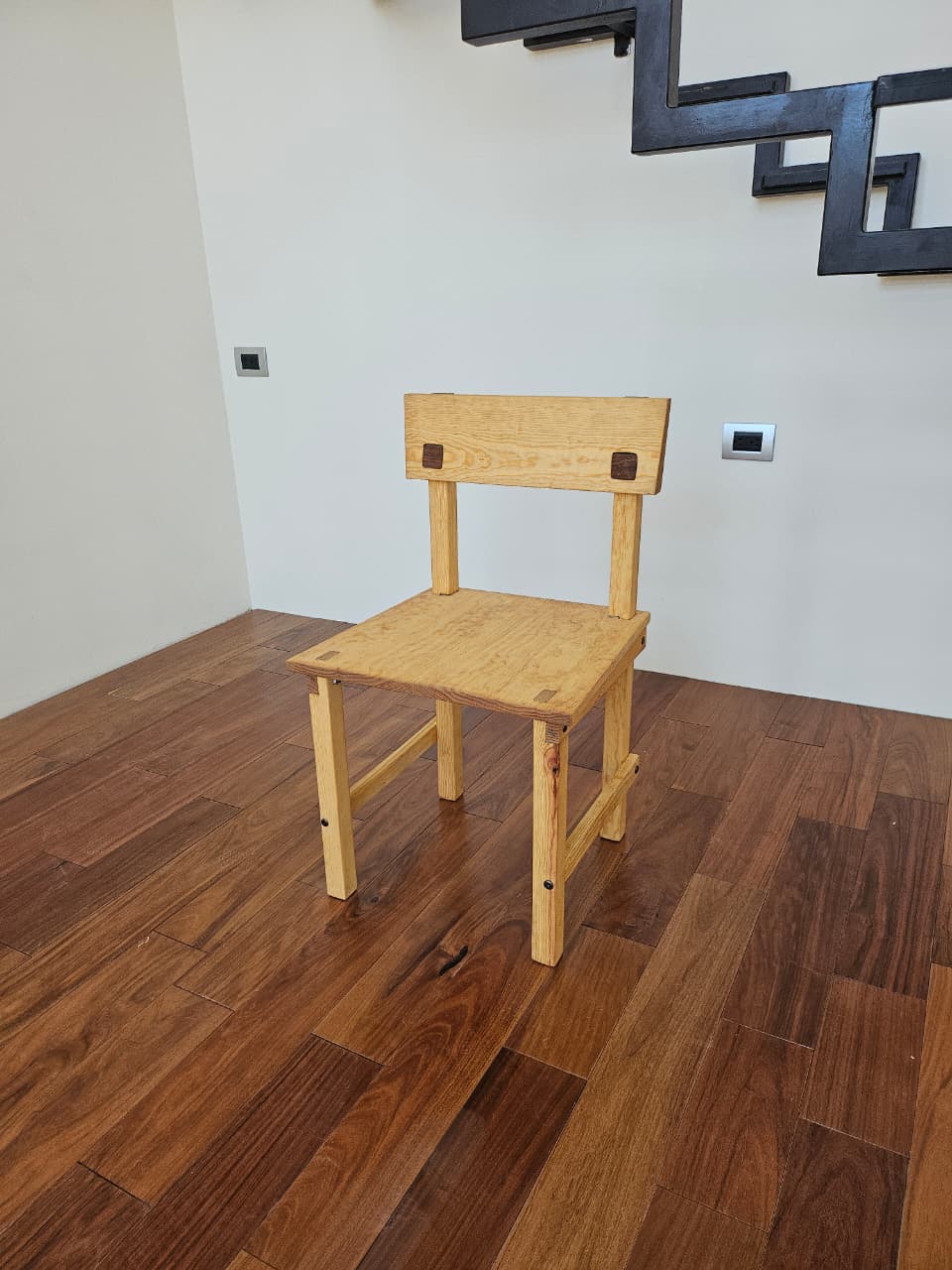
The structure is composed entirely of straight-cut pieces in a single thickness of national pine — a deliberate constraint that reduces manufacturing complexity and enables accessible standardization. A detail in recycled Tzalam or Rosa Morada wood adds a unique identity to each piece without increasing cost, connecting the chair to Mexican material heritage.
The assembly system uses connector screws with inserts — intuitive, tool-friendly, and flat-pack compatible. The compact packaging (55 × 51 × 14 cm) is designed for e-commerce and direct sale, reducing distribution costs and transport emissions.
Key specifications:
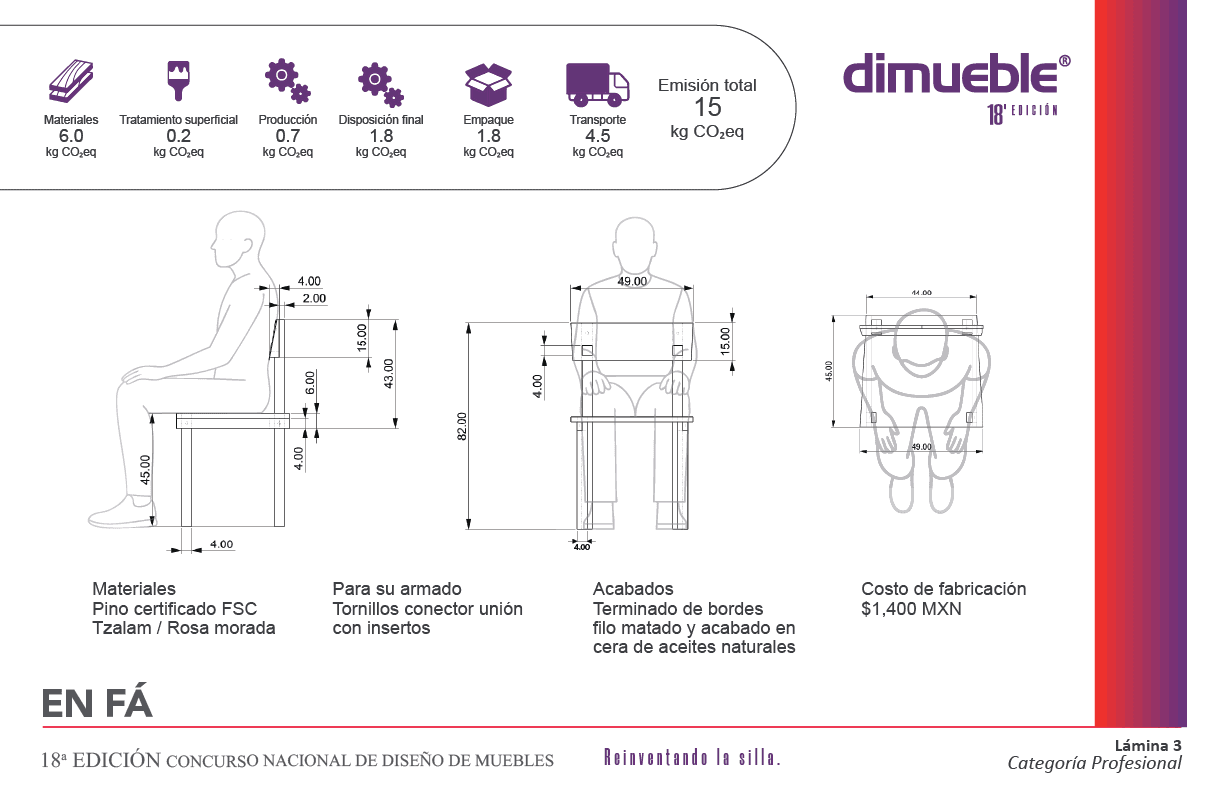
— Total height: 82 cm · Seat height: 45 cm · Width: 49 cm · Depth: 45 cm
— Materials: FSC-certified pine · Tzalam / Rosa Morada (recycled detail)
— Finish: Natural oil wax, matte edge treatment
— Production cost: $1,400 MXN · Estimated retail: $2,700 MXN
Sustainability
From the beginning, sustainability was a structural constraint — not an afterthought. The total carbon footprint was calculated across the full lifecycle:
Materials 6.0 · Surface treatment 0.2 · Production 0.7 · End of life 1.8 · Packaging 1.8 · Transport 4.5 = 15 kg CO₂eq total
This figure is significantly below the average commercial chair of the same type — achieved through material simplicity, local production, and packaging efficiency.
Why this matters
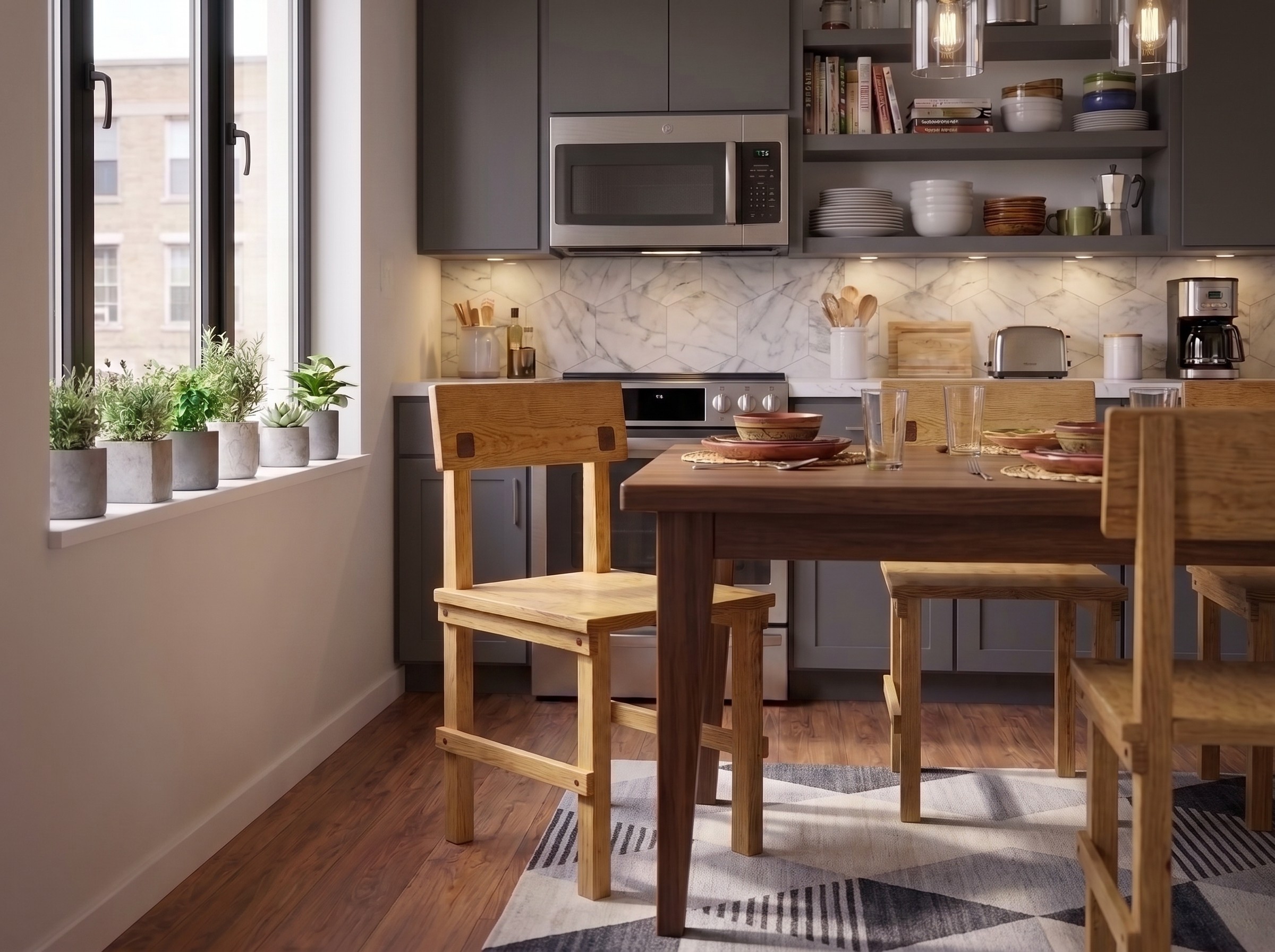
En Fá was designed for people who are furnishing their first home — young people, students, couples, families looking for furniture that is functional, durable, and aesthetically considered without representing a significant investment.
The broader ambition is cultural: in the same way the Silla Acapulco became an icon through its accessibility and replicability, En Fá proposes a new accessible reference — made in Mexico, designed for everyday life.
From Concept to Physical Prototype
The chair was produced as a physical prototype, validating the design's structural integrity, assembly system, and material choices in real conditions. The Tzalam wood detail inserts — visible on the backrest — demonstrate how a small material accent creates identity without adding cost.

Tools Used
Rhino · 3ds Max · Adobe Illustrator · Photoshop
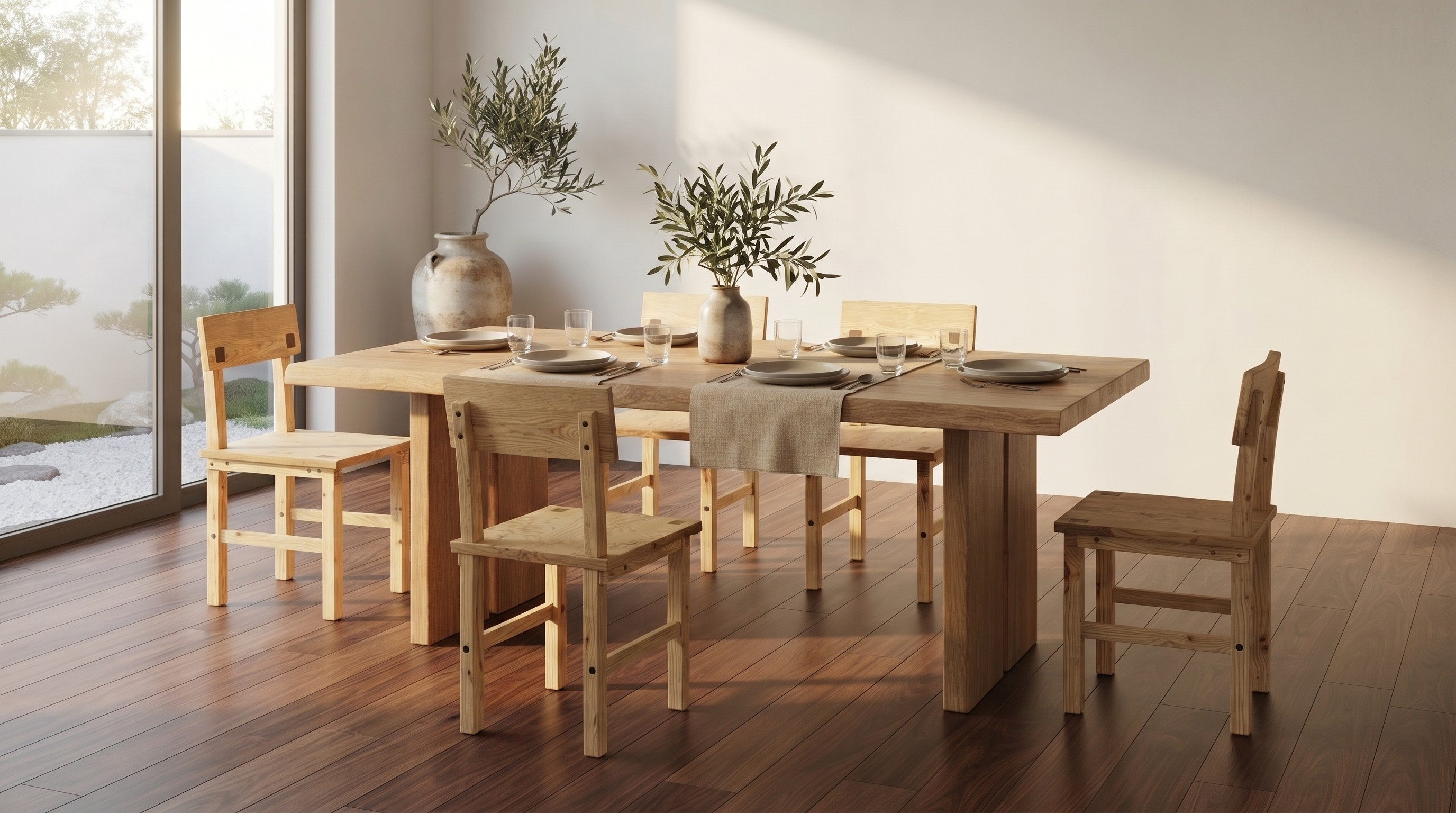
These lifestyle renders were created using Nano Banana, an AI image generation tool, to visualize the chair in real domestic contexts — demonstrating how the design integrates naturally into everyday living spaces.